The 20th edition manual offers vital risk management strategies for all riders, from beginners to experienced enthusiasts. It’s designed for licensing and continuous learning.
What is the Indiana Motorcycle Manual?
The Indiana Motorcycle Manual, directly from the BMV’s website, serves as the official guide for prospective and current motorcycle riders within the state. This comprehensive handbook, currently in its 20th edition, details everything needed to safely operate a two or three-wheeled motorcycle on Indiana roads.
It’s a crucial study aid for preparing for the Indiana motorcycle license, permit, or renewal tests. Beyond test preparation, the manual provides invaluable tips and strategies for risk management, benefiting riders of all skill levels. It’s regularly updated to reflect current laws and best practices.
Why Use the Official Manual?
Utilizing the official Indiana Motorcycle Manual ensures you’re learning accurate and up-to-date information directly from the Bureau of Motor Vehicles. This is paramount for passing the required licensing tests, whether you’re a novice or renewing your endorsement.
The manual isn’t solely for testing; it’s a vital resource for enhancing your riding skills and understanding Indiana-specific motorcycle laws. It equips riders with essential risk management techniques and defensive riding strategies, promoting safety on the road. Relying on the official source guarantees you have the most current and reliable guidance.
Getting Your Indiana Motorcycle Endorsement
Indiana offers two paths to endorsement: complete a motorcycle safety course or study the official manual and pass the BMV test. Choose wisely!
Two Paths to Endorsement
Indiana provides riders with convenient options for obtaining a motorcycle endorsement. The first path involves successful completion of a Motorcycle Safety Foundation (MSF) approved course. Passing this course allows applicants to bypass the traditional BMV skills test and directly apply for their endorsement online, streamlining the process considerably.
Alternatively, individuals can choose to study the Indiana Motorcycle Manual thoroughly and prepare for the knowledge and skills tests administered by the Bureau of Motor Vehicles (BMV). This route requires dedicated self-study and a successful performance on both components of the BMV examination to earn the endorsement.
Motorcycle Safety Course Option
Completing an approved motorcycle safety course is a highly recommended pathway to endorsement in Indiana. This option offers significant advantages, notably the ability to waive the skills test at the BMV. Successful course completion demonstrates a foundational understanding of safe riding practices and essential motorcycle control techniques.
These courses, offered by various providers across the state, provide hands-on training and expert instruction. Upon passing, riders can immediately apply for their motorcycle endorsement online, avoiding the often lengthy wait times associated with traditional BMV testing procedures, making it a fast and efficient route.
Studying the Manual for the Test
Thorough preparation using the Indiana Motorcycle Manual is crucial for successfully passing the state’s licensing exam. The manual covers all essential topics, from traffic laws specific to motorcycles to safe riding techniques and hazard awareness. Dedicate sufficient time to review the material, paying close attention to diagrams and illustrations.
Practice quizzes and sample test questions can help reinforce your understanding and identify areas needing further study. Familiarize yourself with Indiana-specific regulations and be prepared to apply this knowledge to real-world riding scenarios presented during the test.
Understanding Indiana Motorcycle Laws
Indiana’s motorcycle laws, detailed in the manual, cover crucial aspects like helmet requirements, lane positioning, and right-of-way rules for rider safety.
Helmet Laws in Indiana
The Indiana Motorcycle Manual details the state’s helmet laws, which are crucial for rider safety. Indiana law requires riders under the age of 18 to wear a DOT-approved helmet. However, riders 18 and over are not legally mandated to wear a helmet, though it is strongly recommended. The manual emphasizes that helmets significantly reduce the risk of head injury in the event of a crash.
Choosing a properly fitted, DOT-approved helmet is paramount. The manual provides guidance on helmet selection and proper fit, stressing that a helmet is the most effective piece of safety equipment a motorcyclist can use. Despite not being legally required for all, the manual consistently advocates for helmet use for all riders.

Lane Usage and Positioning
The Indiana Motorcycle Manual stresses the importance of lane positioning for visibility and safety. Riders should occupy the lane position that maximizes their visibility to other drivers, often the left or right portion of the lane. Maintaining a visible profile is key to avoiding being overlooked by motorists.
The manual advises against weaving between lanes, as this increases the risk of collisions. It also highlights the need to be aware of road hazards like potholes and debris, adjusting lane position accordingly. Proper lane usage and positioning are fundamental defensive riding techniques detailed within the manual, promoting safer interactions with other vehicles.
Right-of-Way Rules for Motorcycles
The Indiana Motorcycle Manual emphasizes that motorcycles are granted the same rights and responsibilities as other vehicles on the roadway. This means motorcyclists must adhere to all standard right-of-way rules, including yielding at intersections and when merging.
However, the manual also cautions riders to be proactive in asserting their right-of-way, as other drivers may not always see them. It stresses the importance of making oneself visible and anticipating potential conflicts. Understanding and applying right-of-way rules correctly, as outlined in the manual, is crucial for preventing accidents.

Essential Motorcycle Equipment
The Indiana manual details required equipment and strongly recommends protective gear for every rider, emphasizing the importance of both for safety and legal compliance.
Required Motorcycle Equipment
Indiana law mandates specific equipment for safe motorcycle operation. All motorcycles must have properly functioning brakes, handlebars, and mirrors, ensuring optimal control and visibility. A securely fastened helmet is legally required for operators under the age of 18, and strongly encouraged for all riders.
Additionally, motorcycles need a working exhaust system, lights (headlight, taillight, and turn signals), and a horn. The Indiana Motorcycle Manual emphasizes that these components are not merely legal requirements, but crucial elements for rider safety and preventing accidents. Regular inspection and maintenance of this equipment are vital for responsible riding.
Recommended Protective Gear
Beyond legally required equipment, the Indiana Motorcycle Manual strongly recommends additional protective gear for enhanced safety. This includes a DOT-approved helmet for all riders, regardless of age, offering crucial head protection in a crash.
Full-fingered gloves improve grip and shield hands from abrasion. A durable motorcycle jacket and pants, preferably made of leather or reinforced textile, provide significant impact and slide protection. Sturdy boots that cover the ankles are also essential. Eye protection, like goggles or a face shield, safeguards against debris and wind. Investing in quality gear minimizes injury risk.
Importance of Motorcycle Maintenance
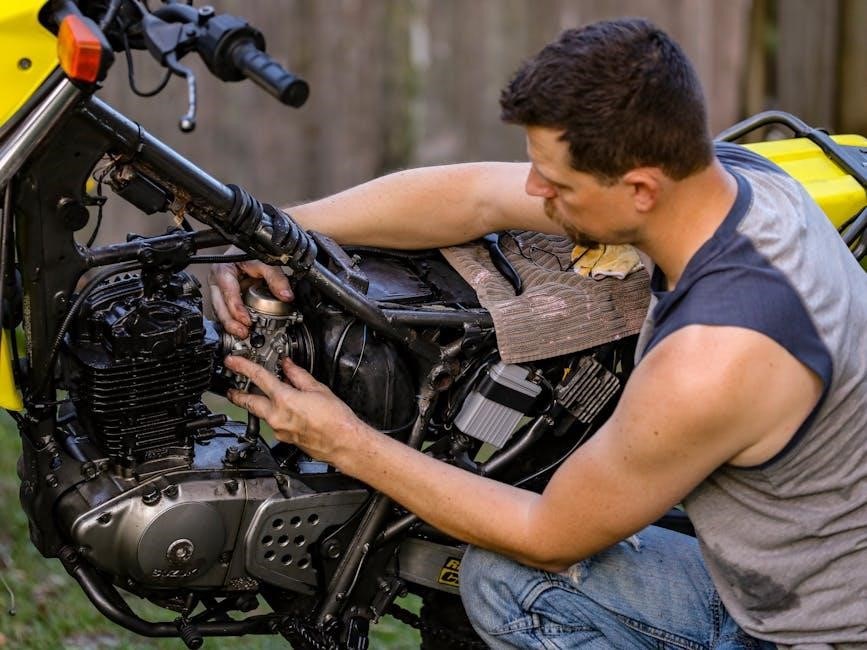
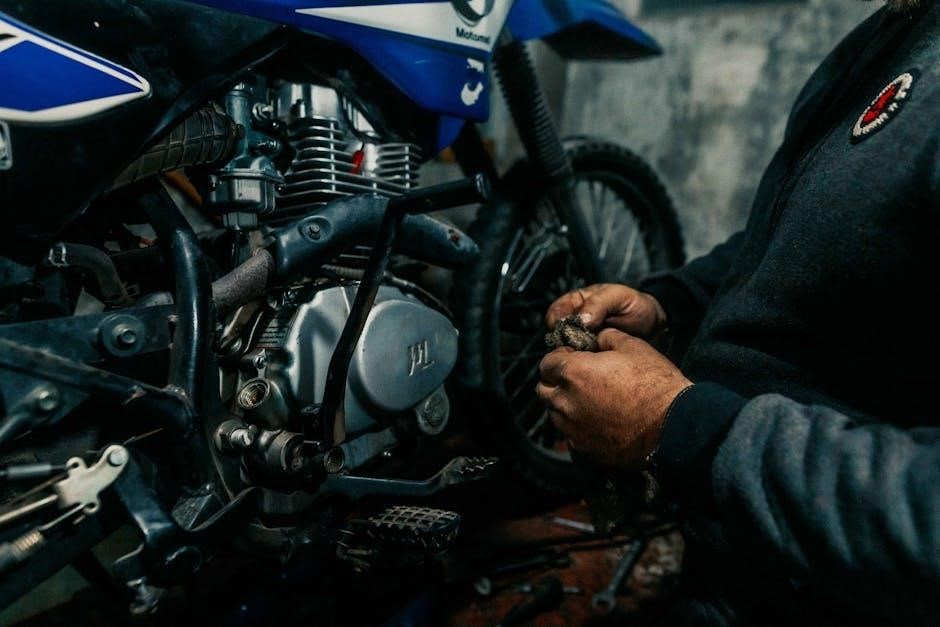
The Indiana Motorcycle Manual emphasizes regular motorcycle maintenance as a cornerstone of safe riding. Proactive upkeep significantly reduces the risk of mechanical failures that could lead to accidents. Riders should routinely inspect tires for proper inflation and tread depth, checking brakes for responsiveness and fluid levels.
Lubricating chains, inspecting lights, and ensuring all controls function smoothly are vital. Following the manufacturer’s recommended maintenance schedule, detailed in the owner’s manual, is crucial. A well-maintained motorcycle performs reliably, enhancing rider confidence and overall safety on Indiana’s roads.

Safe Riding Strategies
The manual promotes risk management, defensive riding, and heightened road hazard awareness for Indiana motorcyclists. These strategies are key to preventing accidents.
Risk Management Techniques
The Indiana Motorcycle Manual emphasizes proactive risk management as a cornerstone of safe riding. This involves consistently scanning the environment, anticipating potential hazards, and developing escape routes. Riders are encouraged to identify and mitigate risks before they escalate into dangerous situations.
Understanding factors like road conditions, visibility, and the behavior of other drivers is crucial. Maintaining a safe following distance, utilizing proper signaling, and being aware of blind spots are also highlighted. The manual stresses that effective risk management isn’t about avoiding risk entirely, but about making informed decisions to minimize its potential impact, ensuring a safer journey for every Indiana motorcyclist.
Defensive Riding Practices
The Indiana Motorcycle Manual strongly advocates for defensive riding techniques to counter unpredictable road situations. This means assuming other drivers may not see you and preparing for potential errors. Riders should position themselves to be visible, maintain a cushion of space, and always have an “out” – a planned escape route.
Practices include covering the brake and clutch levers, anticipating potential hazards like turning vehicles or pedestrians, and being prepared to react quickly. The manual emphasizes that defensive riding isn’t about being fearful, but about being prepared and proactive, significantly increasing safety on Indiana’s roadways for all motorcyclists.
Awareness of Road Hazards
The Indiana Motorcycle Manual highlights the critical importance of constant road hazard awareness for motorcyclists. Indiana’s diverse terrain, from flat farmland to the canyons of Turkey Run State Park, presents unique challenges. Riders must scan far ahead, identifying potential dangers like gravel, potholes, railroad crossings, and wildlife.
Be especially vigilant for changing road conditions, such as wet leaves or sudden drops in temperature that can affect traction. The manual stresses that anticipating these hazards and adjusting speed and positioning accordingly is paramount to safe riding. Proactive scanning and hazard recognition are key defensive strategies.
The Indiana Motorcycle License Test
Prepare to pass your Indiana motorcycle test by studying the official manual; it covers vision, skills, and written content requirements for endorsement.
Test Format and Content
The Indiana motorcycle license test comprehensively evaluates a candidate’s knowledge and practical abilities. Expect a written examination assessing understanding of traffic laws, safe riding techniques, and motorcycle-specific regulations detailed within the official Indiana Motorcycle Manual.
Furthermore, the test incorporates both vision and skills assessments. The vision test ensures adequate eyesight for safe operation, while the skills test demands demonstration of fundamental motorcycle control, hazard perception, and responsible riding behaviors. Successful completion of all components—written, vision, and skills—is crucial for obtaining your motorcycle endorsement.
Vision and Skills Tests
Indiana’s motorcycle endorsement process includes crucial vision and skills evaluations. The vision test verifies adequate eyesight necessary for safe motorcycle operation, ensuring riders can clearly perceive surroundings and potential hazards.
The skills test rigorously assesses practical riding abilities. Candidates must demonstrate proficiency in controlling the motorcycle, executing maneuvers, and responding appropriately to simulated traffic scenarios. Evaluators observe hazard perception, clutch control, braking techniques, and overall responsible riding behavior. Passing both tests is mandatory alongside the written exam to earn your endorsement.
Passing Score and Requirements
Successfully obtaining your Indiana motorcycle endorsement demands meeting specific criteria. Applicants must achieve a passing score on the written knowledge test, demonstrating comprehension of Indiana motorcycle laws and safe riding practices. Completion of a Motorcycle Safety Foundation (MSF) Basic RiderCourse can waive the skills test requirement, streamlining the endorsement process.
However, all candidates – regardless of course completion – must pass the vision screening. Proper identification and documentation are essential throughout the application. Meeting these requirements ensures only qualified and knowledgeable individuals operate motorcycles on Indiana roadways.
Indiana Motorcycle Culture & Landmarks
Indiana boasts iconic landmarks like the Indianapolis Motor Speedway and the Indy 500, deeply woven into its culture, alongside the beloved song “Back Home Again in Indiana.”
Indianapolis Motor Speedway & Indy 500
The Indianapolis Motor Speedway stands as a cornerstone of Indiana’s identity and a global symbol of motorsports excellence. Home to the Indy 500, the world’s oldest annual automobile race, it draws massive crowds and fuels a passionate racing culture throughout the state.
This legendary track isn’t just a venue; it’s a historical landmark steeped in tradition and innovation. The Indy 500, held each May, is more than a race—it’s a spectacle, a celebration, and a deeply ingrained part of Indiana’s heritage. The speedway’s influence extends beyond racing, impacting tourism and the state’s overall economic landscape.
“Back Home Again in Indiana” Song
“Back Home Again in Indiana” is arguably the state’s most beloved and recognizable song, deeply intertwined with the spirit of Indiana and its iconic Indy 500 race; Originally penned in 1917, the song gained immense popularity through its association with the annual motorsport event, becoming a traditional closing anthem.
Its lyrics evoke a strong sense of nostalgia and homecoming, resonating with both Hoosiers and visitors alike. The melody and heartfelt words capture the essence of Indiana’s charm and its welcoming atmosphere. The song’s enduring legacy solidifies its place as a cultural treasure.
Turkey Run State Park ⏤ A Scenic Ride
Turkey Run State Park presents a stunning contrast to Indiana’s typically flat landscapes, offering a thrilling motorcycle ride through dramatic sandstone canyons and lush forests. After traversing seemingly endless cornfields, riders are surprised to descend into these unexpected geological formations.
The park’s winding roads provide a captivating experience, perfect for enjoying the natural beauty of the area. It’s a must-visit destination for motorcycle enthusiasts seeking a memorable and picturesque route. The park’s unique terrain offers a refreshing change of scenery for any rider.

Economic Overview of Indiana
Indiana’s economy thrives on services and manufacturing, with a smaller agricultural sector, positioned within the nation’s industrial belt and centered around Indianapolis.
Key Industries in Indiana
Indiana’s economic landscape is remarkably diverse, though heavily influenced by its manufacturing prowess. The state boasts a significant presence in the automotive sector, with numerous plants dedicated to vehicle assembly and component production. Beyond automobiles, advanced manufacturing, including pharmaceuticals, medical devices, and electronics, plays a crucial role.
Furthermore, Indiana’s logistics and transportation industries are thriving, benefiting from its central location and extensive network of highways and railways. Agriculture, while less dominant than other sectors, remains important, particularly in the production of corn, soybeans, and livestock. Finally, the growing services sector, encompassing healthcare, finance, and professional services, contributes substantially to the state’s economic vitality.
Industrial Belt Influence
Indiana’s position within the nation’s Industrial Belt has profoundly shaped its economic development. Historically, this region – stretching from Pennsylvania to Illinois – was a hub for heavy manufacturing, fueled by access to raw materials, transportation networks, and a skilled labor force. Indiana benefited immensely from this concentration of industry, becoming a major center for steel production, automobile manufacturing, and related industries.
While the Industrial Belt has faced challenges in recent decades, Indiana has adapted by diversifying its economy and embracing advanced manufacturing techniques. The legacy of industrial innovation continues to drive economic growth, attracting investment and fostering a culture of entrepreneurship within the state.
Capital City: Indianapolis
Indianapolis has proudly served as Indiana’s capital city since 1825, becoming the state’s political, economic, and cultural heart. It’s a vibrant metropolis offering a unique blend of Midwestern charm and urban sophistication. The city’s strategic location and robust infrastructure have fostered significant growth, attracting diverse industries and a growing population.
Indianapolis is globally recognized for its motorsports heritage, particularly the iconic Indianapolis Motor Speedway and the Indy 500. Beyond racing, the city boasts a thriving arts scene, numerous museums, and a lively culinary landscape, making it a compelling destination for residents and visitors alike.